
THE EDUCATION HIT LIST: HOW SOUTHERN CALIFORNIA SCHOOLS PUNISH PARENTS AND TEACHERS WHO SPEAK OUT
From LAUSD to Simi Valley, parents and teachers say reporting misconduct can trigger intimidation, isolation, and retaliation.
FEATURE STORYEDUCATIONSIMI VALLEY UNIFIED SCHOOL DISTRICTLOS ANGELES UNIFIED SCHOOL DISTRICTSUPERINTENDENT CÉSAR MORALES
5/30/20268 min read
Across Southern California, parents and teachers say the real danger in public education is not only what happens to children in classrooms, but what happens to the adults who refuse to look away. Education leaders in Los Angeles, Simi Valley and Ventura County now face mounting scrutiny, even as families and front-line employees say the harshest consequences fall on those who speak up. In Los Angeles, Superintendent Alberto Carvalho remains under a federal probe tied to FBI searches of his home and office, though he has not been charged with wrongdoing. In Simi Valley, Superintendent Hani Youssef has become a focal point of community criticism over school safety, district transparency and the treatment of whistleblowers. The Simi Unified School District has hired the Oppenheimer Investigations Group to investigate Superintendent Hani Youssef for whistleblower retaliation against parents. In Ventura County, the Board of Education has voted to investigate Superintendent César Morales after he admitted authorizing bonuses and lifetime health benefits for top deputies without board approval.
WHEN COMPLAINTS BECOME CONSEQUENCES
On paper, California law reads like a reassuring script. Schools are supposed to protect people from retaliation when they file complaints or advocate for children, and districts are supposed to investigate those complaints promptly. Parents and teachers across Southern California describe a very different reality: speaking up can draw sudden hostility from administrators, unexplained schedule changes, colder treatment at the school gate, and the unnerving sense that a name has been quietly flagged somewhere inside the district office.
For teachers, retaliation can mean disciplinary letters, involuntary transfers or being pulled from classrooms and reassigned while still under suspicion. For parents, it can mean being treated less like partners in a child’s education and more like problems to be managed, with complaints reframed as harassment, disruption, or instability. The result is a climate in which formal rights exist on paper, but many families say the practical cost of using them can be steep.
HOW WHISTLEBLOWERS GET LABELED
Parents who file formal complaints often discover that the very process they are told will protect them can become the mechanism used to discredit them. California’s Uniform Complaint Procedures promise written investigations, timelines, and safeguards against retaliation. Yet many families say that once they report misconduct, every interaction begins to feel documented, curated, and subtly tilted against them. A parent who raises concerns can quickly be recast as difficult, hostile, or uncooperative, labels that then shadow every future conversation.
That is the education scarlet letter: an invisible mark that never appears in a policy handbook but shows up in returned calls, guarded meetings, and the way complaints are framed as they move up the chain. A warning letter to a parent, or a note in an internal file, can turn a whistleblower into the apparent problem, chilling not just one family but everyone watching. Teachers who stand with parents, especially in special education, are supposed to be shielded by law from retaliation for helping families secure services. But lawsuits, complaints and advocacy records from across Southern California suggest that speaking up can still carry professional and personal consequences.
LAUSD SCHOOL RETALIATION: MISCONDUCT, RECORDS, AND PUSHBACK
The Los Angeles Unified School District, the state’s largest, shows how school retaliation and misconduct investigations can scale in a massive urban system. For many families, LAUSD has become the clearest test of whether a giant system can police itself when serious allegations surface. Federal officials have opened a Title IX civil rights investigation into LAUSD’s handling of sexual misconduct allegations, focusing on policies that, according to the U.S. Department of Education, appear to automatically reassign teachers accused of sexual misconduct with students instead of fully removing them from student-facing roles. In announcing the probe, the department said the district “appears to be protecting sexual predators at the expense of its students,” a charge LAUSD has denied, saying that reassigned employees are typically directed to stay home and away from students during investigations.
At the same time, LAUSD faces litigation and public-records challenges from journalists and advocates who allege that the district violated California transparency laws by withholding records of teacher misconduct, including complaints and investigative files. Some critics have gone so far as to describe the district’s internal culture as operating like a "criminal cartel," language that reflects the intensity of community frustration but not a legal finding. Teachers have also filed complaints with labor and regulatory agencies alleging harassment and retaliation by district or union officials after they documented misconduct or raised concerns about unsafe or unlawful practices. Parents who speak out publicly about conditions in LAUSD schools likewise say they have received warning letters or so-called disruptive-person notices restricting campus access, which they and some advocates view as tools that can chill criticism even though the district now provides an appeal process.
VENTURA COUNTY SCHOOL RETALIATION: PROCEDURE, POWER, AND PRESSURE
In Ventura County, parents who file school complaints encounter a system that, on paper, lays out a detailed process but, in practice, raises questions about power, pressure and retaliation. Parents are told they can bring concerns about bullying, harassment or discrimination, meet with administrators and, if they remain unsatisfied, push their complaints up through Human Resources and the superintendent’s designee, with the right to appeal to the California Department of Education.
In May 2026, the Ventura County Board of Education voted to seek a forensic audit after unauthorized pay increases and lifetime health benefits were awarded to top deputies at the Ventura County Office of Education, where César Morales serves as county superintendent. One recent controversy centers on an email attributed to Misty Key, Deputy Superintendent of Fiscal and Administrative Services at the Ventura County Office of Education and publicly identified in local materials as Morales’s fiancée. In a screenshot of that email, Key appears to warn a parent who had made allegations on social media that such claims "can lead to serious legal consequences, including civil lawsuits for defamation and potential criminal charges," wording that some parents interpreted as a legal threat rather than neutral guidance about defamation law. Because this account rests on a screenshot rather than a court decision, it is best described as an alleged instance of pressure on a critic, not as a proven act of retaliation.
SIMI VALLEY UNIFIED SCHOOL RETALIATION: REPORT ABUSE, RISK BACKLASH
In Simi Valley Unified School District, parents and advocates who report staff misconduct or special education abuse describe a starkly different reality on the ground than the district’s formal discipline and safety policies suggest. They say responses to allegations involving employees can be slow or limited, while district action moves far more quickly when staff members complain about parents. In that telling, the district’s machinery seems to move fastest when it is defending itself.
That fear is sharpened in a lawsuit filed by former employee Daisy Alcaraz, whose allegations bring the abstract idea of retaliation down to a single classroom and a single child. According to her complaint, Alcaraz was fired after she reported what she describes as abusive treatment of a special education child at Santa Susana Elementary School within Simi Valley Unified. The lawsuit alleges that during a single week in October 2025, she witnessed repeated aggressive conduct by a classroom teacher toward special education students, including screaming in the face of a nonverbal autistic student, slamming a student’s laptop shut, pulling a student by a hoodie, removing a student’s desk as punishment, and mocking self-stimulatory behaviors such as humming and rocking. The complaint further states that she documented what she saw in a written incident report and that her termination followed those reports; the district and the teacher dispute these allegations, and no court has yet resolved them.
A separate local episode involving the district’s communications office, run by Jake Finch, has been cited by some parents as an example of retaliatory messaging. In a Facebook post attributed to Jake Finch, whom Simi Valley Unified identifies as its Public Information Officer, Finch speaks “on behalf of Dr. Hani Youssef” while making disparaging statements about a parent who had raised safety concerns about the district. In the post, Finch writes that “any reasonable person would never invite this person into their home” and calls the parent “anti-Simi Valley” and “anti-decency.” In the view of that parent and several local advocates, the remarks functioned as retaliation for whistleblowing by publicly discrediting the complainant rather than addressing the underlying safety concerns.
Local advocates say these episodes contribute to a climate in which teachers and staff often feel they can speak only anonymously, including through social media and confidential reporting channels, because they fear retaliation if they attach their names to complaints. Whether every allegation is ultimately sustained or not, families and employees describe a growing sense that challenging the district can carry social and professional consequences from campus to campus. In a relatively tight-knit community, being labeled the "trouble parent" or the "disloyal employee" can carry social and professional consequences from campus to campus.
A PATTERN ACROSS SOUTHERN CALIFORNIA
Taken together, the stories from Los Angeles, Ventura, Simi Valley, and other Southern California districts trace what many families and educators view as a broader regional pattern. From Santa Barbara to Temecula, advocates recount similar stories: educators they say were punished after standing up for students with disabilities, parents they say were marginalized after documenting unsafe or unlawful conditions, and districts they believe fought to control records that might expose past mishandling of misconduct — different districts, same playbook.
Place those stories beside the legal framework, and the disconnect becomes hard to ignore. State and federal law prohibit retaliation and require districts to investigate complaints, protect complainants, and offer clear avenues of appeal. District websites prominently list Title IX coordinators, complaint forms, and procedural timelines. Yet the lived reality many parents describe is one of opaque decision-making, selective disclosure of information, and the constant fear that any new complaint will deepen the red mark next to their name in district files.
RECORDS, DELAYS, AND INFORMATION CONTROL
Information is power in these conflicts, and districts usually hold most of it. Parents depend on school officials for incident reports, disciplinary records, and internal correspondence that can reveal how allegations were handled. Laws guaranteeing access to public records and due process sound strong in theory, but families and teachers across Southern California frequently describe stonewalling, slow-rolled document production, and strategic redactions that make it difficult to see what really happened.
In LAUSD, allegations that the district withheld misconduct records go to the heart of whether parents can trust what they are being told about who is working with their children. In other districts, advocates say they have used public records and litigation to uncover patterns involving uncredentialed staffing, revolving substitutes in special education and internal findings that were not shared with families until outside pressure prompted disclosure. When districts are accused of hiding or delaying information, the official narrative can remain tightly controlled: problems are minimized, investigations are referenced but not fully explained and parents who keep pressing say they are portrayed as unreasonable, obsessive or misinformed. In that version of events, the paperwork always looks cleaner than the classrooms.
WHAT SPEAKING UP CAN COST
The result, according to many parents and educators, is an upside-down accountability system. The parent who reports a predatory teacher in Los Angeles, the educator who demands lawful services for a disabled student in Baldwin Park, the family in Ventura insisting on a fair hearing, and the advocate in Simi Valley who refuses to back down can all end up becoming part of the story rather than the misconduct they say they tried to expose.
Retaliation, as described by parents and educators in these disputes, does not always arrive as an outright threat. Sometimes, they say, it takes the form of a reclassified complaint that suddenly targets the parent, a teacher’s file that quietly thickens with negative notes after testimony on behalf of a student or a family’s emails being routed through legal counsel rather than answered directly. Over time, they argue, that pattern teaches a lesson more powerful than any written policy: silence feels safer than advocacy. In that telling, the education scarlet letter is not an official policy but an informal warning about what can happen when people refuse to look away.
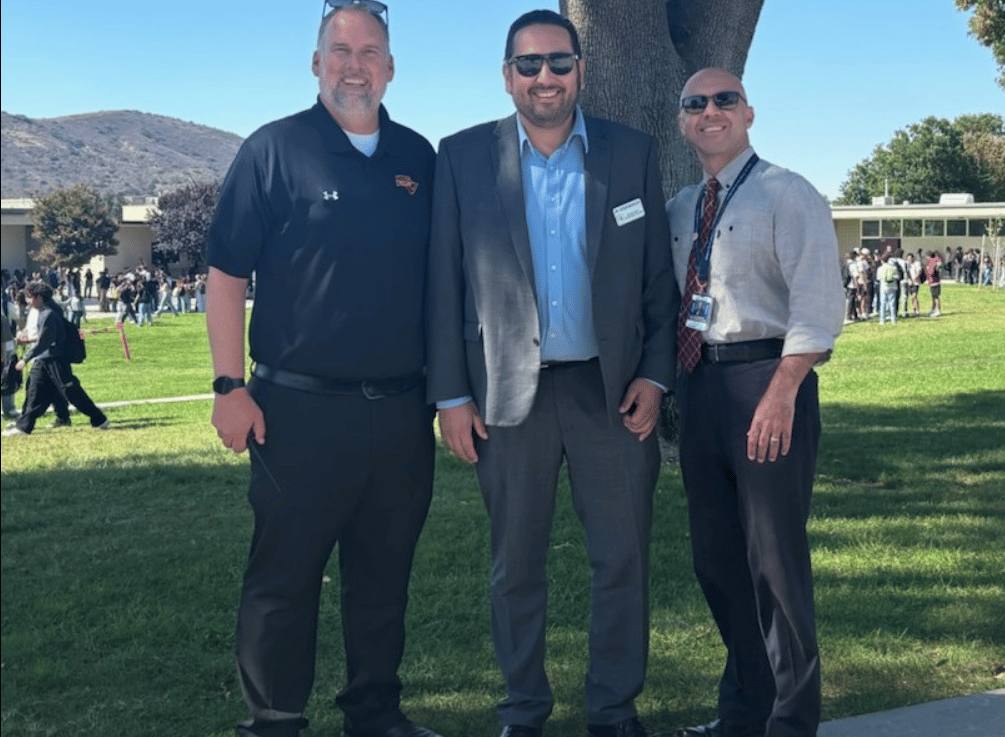
Superintendents César Morales and Hani Youssef
Support
Confidential reporting for abuse and misconduct cases.
Safety
Trust
Report@haniyoussef.com
© 2025. All rights reserved.
The content published on ReportHaniYoussef.com may include allegations, opinions, personal experiences, commentary, and community-submitted information that has not been independently verified. Publication of information on this website does not constitute a determination of fact or wrongdoing by any individual or organization.
This website is intended solely for informational, educational, and advocacy purposes. The views expressed by contributors, commenters, or submitters are their own and do not necessarily reflect the views of the website operators.
We encourage all individuals to report concerns through appropriate legal, administrative, and regulatory channels. Nothing on this website should be interpreted as legal advice.
If you believe any content published on this site is inaccurate, defamatory, or violates your rights, please contact us so the matter may be reviewed promptly and appropriately.